Monday, August 9, 2010

Mixed Is/Mixed Ain't

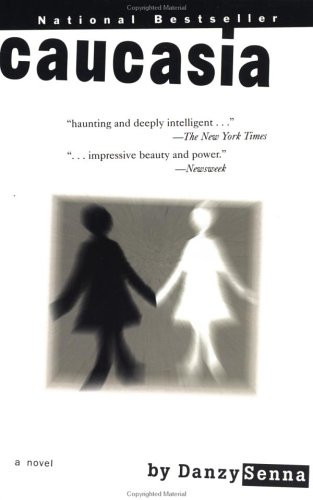
"A long time ago I disappeared. One day I was here, the next I was gone. It happened as quickly as all that. One day I was playing schoolgirl games with my sister and our friends in a Roxbury playground. The next, I was a nobody, just a body without a name or a history, sitting beside my mother in the front seat of our car, moving forward on the highway, not stopping. (And when I stopped being nobody, I would become white--white as my white skin, hair, bones allowed. My body would fill in the blanks, tell me who I should become, and I would let it speak for me.) This was back when Boston still came in black and white, yellowing around the edges. You could just make out the beginnings of color: red-eyed teenagers with afros like halos around their faces, whispering something about power and ofay to one another as they shuffled to catch the bus; a man's mocha hand on a woman's pale knee. I disappeared into America, the easiest place to get lost. Dropped off, without a name, without a record. With only the body I traveled in. And a memory of something lost. This is what I remember."

This excerpt is from the first page of Danzy Senna's semi autobiographical novel Caucasia published in 1998. Without giving too much away (the book is a relevant must read, even twelve years later): set in the turbulence of 1970s Boston, the story is told by Birdie, the daughter of a black scholar/revolutionary and a blue-blood WASP mother who denounces her family and white community to join in the "struggle". Birdie is the youngest of two children. From the beginning it's very clear that Birdie can "pass" as white in a way that her older sister Cole never can and it's this continuous act of Birdie's "passing", becoming invisible and at one point quite literally white, that emerges as one of the central themes in the book.

As someone who has never passed as anything other than black (and maybe a lil' somethin' else from time to time, but always black), I was surprised to find just how much of Birdie's story resonated with me-- the idea that our mixed bodies become at once the canvas and the mirror upon which others cast their perceptions of who we are. At the same time, I kept wanting to get inside Cole's head. I wanted to hear her side of the story-- the story of the sister "left behind"-- the sister who's "black" body could not be erased or so easily forgotten. Instead of feeling like Birdie, I found I felt much more like Cole. We only hear about Cole through Birdie and see her through Birdie's eyes. Birdie seems envious of the ease with which her sister can pass through and into the black community, while she struggles to make her blackness visible. Ultimately, Birdie passes as white, Cole passes as black.

Lately, this idea of passing has been nagging me. Racial ambiguity and passing are big issues in our multi experiences, yet  are they prerequisites? How do our current conceptions of passing support the centering of white/non-white identities in the mixed community? Can we think of passing as multidirectional-- not just passing as white, but also the ability to pass as black, Asian, Latin@ or even races/ethnicities we don't identify with at all?

Most recently, at the Mixed Roots Film and Literary Festival I remember a moment (albeit very brief) in which I felt a bit out of place. It was a funny feeling to have since, as I mentioned before, it was the first time I had ever been in a space where multiraciality was so visible and seeing so many other multi folk was something akin to a spiritual experience. Yet many of the organizers and participants were racially ambiguous in a way that I never have been (well not unless you count the first few days after my birth, before the melanin kicked in). And it left me with that heavy "not enough" feeling.

Crazy, huh, to feel like you're not "mixed enough"? All of a sudden I felt like I wasn't "light"enough, my hair not coiled and curled enough to pass myself off as a mixed (black)girl. Granted, this was all in my head and lasted only a few fleeting seconds. Yet reflecting on that moment, I realized there were quite a few things going on:
  • Like every other category, there are definite essentializing characteristics and stereoypes associated with multi people. I have, unfortunately, despite all my continued efforts towards counter-socialization, still managed to internalize some of them :( Even though I'm multi, and despite how open other multi people are, I've managed to internalize this idea about what a "text-book" multi person looks like (yes, wildly problematic, I know! I'm workin' on it.)
  • White/non-white multi experiences are still inevitably being centered when it comes to who's talking and what's being spoken about in terms of multi issues. And while that experience is really important and should be heard, there are also the voices of non-white multi people out there, as well, that add a rich complexity to the issues already being discussed.
  • Someone recently said to me: "I'm not mixed, multi-racial, or whatever...I'm just light-skinned." This declaration got me to thinking about passing and multiness generally, but particularly how it plays out in the black American community. How do we define "mixed-race" or "multi-racial?"  Who gets  to claim a mixed identity and how is mixedness policed within a given community? Ultimately, who's mixed and who isn't?

 One of the biggest challenges to answering this question is how "mixed-race" is defined. Mixed-race as we've come to understand it applies to all those who can claim two or more "races" as part of their immediate ancestry. For clarity sake, most refer to this as "first generation" mixed-race: meaning your parents are of different races. This definition, however, starts getting a bit complicated when you think about multi people having children (ie: If Michelle Obama was actually Kenyan and white American like Barack) are these children also considered mixed-race? And actually, let's back up for a sec: can Sasha and Malia Obama be considered mixed  though their mother isn't "first generation"? What about people with that one Native American great-grandma somewhere down the line? What about people that can claim two different ethnicities, but not necessarily "races" like Japanese and Filipino or Dominican and Puerto Rican? What about transracial and/or transnational adoptees who are monoracial, but have been raised in families of a different race(s)? See? It all starts unravelling... especially when things like the rule of hypodescent, and native blood quantam laws have historically policed how multi people identify.

I've also come across (mostly older) people that think mixed-race applies to just white/non-white individuals or even more specifically bi-racial black/white individuals. I've also heard people say that white ethnics/ethnicities should be included in mixed-race. The response from many is that the distinct experience and history of racialization, marginalization, "othering" and racial inequality faced by people of color and their mixed descendants in the U.S. makes including white ethnicities well... not likely to happen any time soon. The assimilation of white ethnic groups throughout U.S. history into a dominant WHITE group writ large is fascinating stuff and only further highlights the constructedness of race itself.

There are also arguements around mixed races as in races that are considered multiracial by definition such as Latin@s, Pacific Islanders and African Americans. All these communities have had a long history of racial mixing and that should not be understated. U.S. racial policy made it such that mixed African Americans could not claim anything but black (one-drop rule) and later during African American freedom movements and rights struggles, claiming to be mixed within the community was sometimes viewed as being anti-black and a threat to the racial pride and solidarity being built. At the heart of Latin@ identity is the mixing of indigenous, European and African peoples while Pacific Islanders have indigenous, Asian and sometimes European ancestry. There are also countries all over the Americas that consider their national racial identity to be "mixed" like Mexico (la raza cosmica), Brazil and Trinidad.

If race is a social construct and there are whole nations of people that identify as mixed then who, in fact, is mixed? Are we all mixed?...

So, I took us on that wild rambling goose chase to conclude with this:

I don't think we're all mixed. And while, I'm still grappling with all the issues I highlighted above, something still irks me when people say, "Well, we're all mixed-up anyway, so what are all these mixed people whining about?" I believe that there are certain experiences that bind multi people together, but that also differentiate and even divide us as a collective just like any other identity group. In the U.S. as in other countries where there are mixed people, there is a distinct history that weaves itself between the lines and more often than not, that history is not a very happy one. In our desire to embrace all the identities within us and to recognize  and not exclude others, multi organizing and efforts to develop a "collective"identity can get quite complicated.

But no one is saying we have to establish some sort of clear cut collective identity as multi people. It's precisely this inability to build a defineable, collective identity, that makes the multi phenomenon so post-modern. If anything the strength in multiness is that it inherently deals with the fluidity and maleability of identities and the shaky foundations of "authenticity" and monolithic identities. It demonstrates that whether we're multiracial or even monoracial we're all a bit like Birdie-- our bodies filling in the facts and fictions, the realities and the myths of who we once were, who we are and who we could become at any given time...


Wednesday, August 4, 2010

How Many Hafus Make a Whole?


ha•pa (hä’pä) 
  hafu (ハー hāfu)
  half (häf)

       whole ?      


I remember the first time I picked up Kip Fulbeck's Part Asian, 100% Hapa... I was a bright-eyed, (way too) pensive undergrad still grappling with my multiple identities and trying to find the adequate words to bridge the vast continents of race, culture and experiences within me. I had just recently been introduced to the term "multi" as a legtimate way to identify myself and now I was hearing a new word (which wasn't quite so new at all): hapa.

Now, I'm not "half" or "part" Asian, but  as a multi person, there was this great sense of recognition and empowerment that came with seeing Kip's simple photographs and the hand-written statements from each participant of the Hapa Project. Despite some of the murmured criticism and real critical debates around the use (some might even say downright "appropriation") of the native Hawaiian term hapa, the mere act of putting mixed Asian identities in the U.S. out there was radical and transformative in its own right. By doing so, Kip put us all out there as multi people and dared us to claim spaces and (re)name ourselves. It was a really important moment for the multi collective here at home.
As I highlighted in an earlier post, there are really exciting conversations going on around multi issues all over the world. Most recently, three multi Japanese women Natalie Maya Willer, Marcia Yumi Lise and Haru Adelia Maruyama Carrasco-- a photographer, social researcher and multimedia designer-- embarked on the Hafu Project.

"Haafu" (romanization) is a Japanese term that like hapa means "half." Japan has used different words to describe mixed people throughout its history. The Hafu project defines hafu broadly as those who identify as part Japanese anywhere in the world, while also recognizing histories of Japanese migration globalization/internationalization and even imperialism*. The project is multimedia-based and includes photography, video, exhibits, a website and public lectures about multi Japanese people in Japan and elsewhere. In addition, Marcia Yumi Lise is advising co-directors Megumi Nishikura and Lara Perez Takagi who are working on a documentary also entitled Hafu, which aims to chronicle the experiences of multi Japanese people in Japan. (FYI: The co-directors are currently looking for a multi-Japanese person who has recently moved to Japan or planning to move to Japan in the near future to be one of the central characters in the film. Click here for more info.)


In Japan, multi Japanese people are gaining visibility and increasingly being heralded as the "ideal", "having the best of both worlds" (sounds familiar, no?). Yet like many countries, Japan has had a history of being less than kind to its mixed population. Multi Japanese people have been marginalized, discriminated against and othered. This history goes wayyyy back and is rooted in understandings of collective identity, national identity, kinship and community in Japan.

The Hafu project states, " While being a Hafu is often seen as something desirable in Japan, it is true that some Hafus are largely regarded as non-Japanese in Japan due to their non-Japanese appearance and blood line. The Japanese society is obsessed with collectivism and conformity. While on the legal level, nationality defines who belongs and does not belong to a nation, on a social level, people of mixed heritage are often subjected to ethnic and racial hurdles." So,  in thinking about these amazing Hafu multimedia and film projects, I've been reflecting first on the ways in which "half" gets used by both multi and non-multi people in describing mixed identity and second, how multiness and nationhood intersect-- who comes to "belong" to a nation and who is rendered a perpetual "other," or "foreigner"? (Stay tuned for "How Many Hafus Make A Whole: Part II!! Also check out Mia Nakaji Monnier's article Part Asian, Not Hapa)

 
(*Though, I wonder which "part" Japanese identities,if any, get centralized in the Hafu Project, ie: white and Japanese, black and Japanese, Chinese and Japanese, Filipino and Japanese etc... what role does Japanese imperialism play in terms of thinking about mixed racial subjects in Korea, the South Pacific or even Hawaii? In the U.S. multi movement, white and non-white identities are often central, which is also another reason why Kip's book was groundbreaking in it's inclusion of hapaness and multiness outside the white-non-white binary. Just a thought...)

Sunday, August 1, 2010

The Life & Times of Jazmine DuBois

I've loved The Boondocks and the warped genius mind of Aaron McGruder ever since his strip first appeared in the comics section of the Sunday Advance when I was twelve. He's been corrupting my mind with his satirical brilliance ever since....

I thought I'd do a few posts on multi people and the media and instantly the first image that came to mind was not Halle Berry, Keanu Reeves or Vin Diesel, but rather Jazmine DuBois in all her naive, doe-eyed, giant blonde afro puff glory.

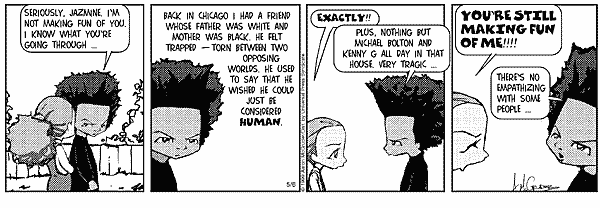
Jazmine, and her parents Tom and Sarah DuBois are a really interesting part of McGruder's world and we could sit here for hours just breaking each of these characters down. Jazmine is bi-racial and when she's not busy praising Santa Claus (she thinks he's Jesus) she spends most of her time feeling "mixed-up," and defending herself from Huey's dry (yet hysterical) remarks about her identity crises. It's a little hard to tell where McGruder stands on multiraciality in the black community. While it may seem like everyone is always telling Jazmine to just "get over it" and come to the "black side" already, McGruder does treat Jazmine with uncharacteristic care and even empathy compared to many of the other characters, complicating her story while still relentlessly mocking her in a big brother kind of way, via Huey.

No matter where McGruder and his hosts of lovers and haters might stand, Jazmine and her role in the Boondocks world are definitely worth taking a closer look at....


Friday, July 30, 2010

Pretty Baby, Multi Baby, Love Child...

"There is something fantastic that happens when people who come from different backgrounds meet and fall in love. The children who come from these unions are not mere mixtures; they're "magic potions"! When I look at them, I see exotic spices, fragrant herbs, lovely flowers, and colors that can overwhelm the senses.   
I see a vision of the future."
-Cher from Kip Fulbeck's "Mixed: Portraits of Multiracial Kids (2010)"


As the  "half-breed" diva herself puts it, multi babies have the tendency to make people catch a serious case of the warm and fuzzies (not gonna lie, myself included).Cher recorded her hit single "Half Breed" in 1973. Being part Cherokee herself, Cher sings about being a mixed race woman and not being accepted by either her Cherokee or white family. She ends up leaving both communities and subsequently becoming a superstar. The simple song is pretty downright depressing, but there's something strangely empowering about her last line "But I can't run away from what I am" sung in a Las Vegas showgirl meets Tiger Lily get-up (that's strangely alluring and offensive all at the same time) on top of a pinto horse. Fastforward more than thirty five years later and Cher is talking about "falling in love" and "exotic spices, fragrant herbs and lovely flowers."


In Cher's afterword to Kip Fulbeck's latest book, Mixed: Portraits of Multiracial Kids quoted above, there's almost this sense of being "intoxicated" by the mere sight of multi kids (aka: magic potions). In these our recent postracial climes, multi babies mark race reconciliation and signal the end of racial "difference". Though nothing can be further from the truth, there is a way in which multi kids are seen as bright and shiny, disarming (...and I present Exhibit A on the left) new members of a changing America. Do multi babies= love conquering all, in this case racial/ethnic differences?

Eagerly flipping through Kip's book and reflecting on the subsequent "oohs, aahs" and the breathy "they're so cute/beautiful" sighs that multi kids usually incite, strangely enough got me thinking about the not so lovely (or distant) realities of our multi pasts. Yeah, I know... I'm such a downer. But as Kip's book demonstrates, we may be headed towards a happier future ( I hope).


Thursday, July 8, 2010

It's A Big Mix-d World Out There....

Maybe it was the Queen's recent day trip to my home state earlier this week, but lately, I've been feeling an acute London calling...                                
No, it's not  the seductive British accent (epitomized by James Bond & Sade), or the lure of fish & chips or even better--some good Indian food, it's not those touristy Kodak moments in front of the classic red telephone booths or by the lions and fountains in Trafalgar Square; it's not the chance to torment a beefeater in front of Buckingham Palace, or use the "loo" and ride the "tube" (though obviously, not at the same time)-- it's not even Prince William himself that's making me want to pack up my bags and book the next 747 across The Pond to the great land of the Britons.

It's programs like Mix-d!

Mix-d: The Multiple Heritage Project is an organization (that's actually housed in Manchester, but works in London and all over the UK) whose mission is all about seeing  "mixed race people at the heart of mixed race discussions." Over the past few years they've hosted community conferences, forums and trainings. Mix-d works in partnership with supporters and funders to engage young people, professionals and others in discussion around multi experiences and issues personally, socially, culturally and politically. One of the many things I'm loving about the program is the neologism of "mix-d". The oft used term "mixed" or "mixed-race" can conjure up ideas and images of being "mixed up" and also signal a history of multi people  being spoken for and about as opposed to multi people speaking for and about ourselves. (Subjectivity 101 courtesy of many months in college spent worshiping the writing of British cultural theorist Stuart Hall)  British home-grown organizations like Mix-d as well as online websites and thorough resources like InterMix.Org are dedicated to empowering, supporting and educating the multi community and allies in the UK. Check out the video below of their photo-book of multi people (very a la Fulbeck :)


I've had my eye on the UK and it's brand of "multiculturalism" every since reading Zadie Smith's first novel White Teeth. Like the US, the UK has had a long (though mostly silenced)  multi history. Also, like the U.S., the year 2000 marked the first time that British citizens could check a box designating their "mixed" ancestry on their census. Over the last two decades, the multi population has grown exponentially and is coming of age at a time when "multiculturalism" and now "post-racial" are the order of the day.  Unlike the U.S., however, many multi Brits are fighting to identify solely as "mixed" without having to explain what they "are." The conversation(s) play out out a little differently here at home where identities are so highly politicized- particularly racial and ethnic identities. We're also a vast country and from region to region multi people are experiencing, identifying and negotiating their lives and identities very differently from one person to the next. Mix-d stresses education and is very youth-oriented and community-based. They also discuss terminology and wording-- something that's crucial in order for multi people to speak for and about ourselves. It's high time the UK and U.S. multi movements exchanged notes so that we can make our respective work even stronger.

There's great work being done in the UK, Canada and even parts of Austrailia. Other Tongues: Voices of Mixed Race Women is an anthology edited by Canadian writers Adebe D.A. and Andrea Thomspon set to be published this coming winter. There's also a great deal of amazing scholarship in Canada, the UK and Austrailia dealing with critical race, and critical mixed race studies in those countries but also discussing Africa, Asia and Latin American issues of multiraciality.


Though I probably won't be making that trip across the Atlantic anytime soon, I think engaging in conversations on multi issues transnationally from the Americas to Europe, Africa, Asia and Austrailia-- is essential, not to mention it would be pretty cool to think of a global multi connection and consciousness. We can dream a little, no?


Cheers!
Mixed Dreamer


Thursday, June 24, 2010

The Dangers of Kumbayahing Our Way Into (Post-Racial) Oblivion

Tiger Woods, everyone's favorite (well, till all those women started comin' out the woodwork) Caublinasian should have been our first warning....

But back in the late 90s, people were too caught up in the hype of Tiger either being our long awaited multiracial Everyman (case in point: "I Am Tiger Woods" commercial) or accusing him of "denying the race" to see that multiraciality (with Tiger as it's shiny new consumer-ready poster child whether he wanted to be or not ) was being used to support an agenda that used "mixed America" to bolster anti-affirmative action debates, to potentially jeopardize the allocation of resources and services to marginalized communities of color and perhaps most dangerously-- to kick start an ideological shift in the U.S. (later cemented by the 2008 election of Barack Obama) that the "mixing" and subsequent "browning of America" actually marked first, a colorblind and now, a post-racial era.

In these new post-racial times,  we're suddenly all "off the hook". We're off the hook because we have the son of a black Kenyan father and a white American mother from Kansas as president. We're off the hook because people of color had their movements and "got their rights". We're off the hook because there are now more mixed race people in the United States than at any other time in our history....

But don't believe the hype...

Are we off the hook with Oscar Grant only the latest in a harrowing history of racialized and gendered police brutality, what about the startling rise of the anti-government and increasingly white supremacist supported Tea Party, --WHAT ABOUT ARIZONA!!!????

The dawn of this so-called "post-racial" era was already imploding seconds after it was declared. We as a country and as a world are not even close to being "post-RACIST" which makes holding hands and singing "We Are the World" (as much as I would love to) damn near impossible in the wake of such stark and continuing realities.

I'm still in the process of learning about all this and I've come across some great articles in David Brunsma's "Mixed Messages" and in Reginald Daniel's "More than Black" as well as several other books on the multiracial movement that discuss just how easily the movement (throughout the late 1980s and 1990s, it focused primarily on getting a multiracial box or option to choose more than one box or identifier on the 2000 U.S. Census) and just the image of "multiraciality" itself was co-opted by a conservative agenda back in the 90s. 
From Multiracial Identity and the U.S. Census
by Tyrone Nagai
"Conservative political leaders such as Newt Gingrich and Ward Connerly supported the shift to multiracial classification, largely because they saw it as contributing to the curtailment of race- based affirmative action programs (Williams, 2006). Republican Congressman Thomas Petri of Wisconsin introduced H.R. 830 in the 104th Congress (June 1996), which tried to force the OMB to add a multiracial category to the 2000 U.S. Census. Petri dubbed this the “Tiger Woods Bill.” Despite numerous efforts, Tiger Woods refused to join or endorse the multiracial cause (Wil- liams, 2005).

Opposition to multiracial identification appeared from the old guard of the civil rights movement, including many Democrats in Congress. They argued that allowing multiple racial identities on government forms would reduce the visibility of racial minorities in statistical data, especially African Americans who are already undercounted by government agencies. The cumulative effect would be a reduction of money and services to minority communities (Williams, 2006). It has also been observed that discussion involving multiracial identification and racial classification is inseparable from administering the modern welfare state, especially with regard to civil rights enforcement and affirmative action programs (Skerry, 2002).
"

Nothing's really changed, the political right still wants nothing more than to stop being accountable to marginalized communities who's radical freedom and civil rights struggles transformed this nation so many years ago. And what better way to do that than to point to multi people as a sign that "race" and therefore the need to eradicate racial inequality are now obsolete?

What does concern me are the ways in which a possible new wave of the multiracial movement would negotiate civil rights enforcement, social justice and working with (as opposed to against) the needs of other communities of color. Right now, I think pushing for a multi movement 2.o that is not only about identity development but also about coalition building and anti-racist/anti-oppression would be the only way to do that. How? is a whole other question.

It's no mistake that the term "post-racial" itself, began growing from a whisper to the now triumphant self-congratulatory shout, with just the sheer possibility of the first black/multi president-- America's redemption. Yet, our nation's history is predicated on an inheritance of racial inequality and oppression. We can't "post" that away in one single moment or on the back of one black/multiracial president or 6.8 million people checking "more than one box." We need to attack that racial inequality at it's root because EVERYTHING in the U.S. revolves around it, no matter how much we want to close our eyes and click our heels together.

So where do multi people fit in this post-racial oblivion? As usual we find ourselves teetering right on that edge, setting up camp right at that border...

You see, the nagging problem with multi people is that we make really good poster children-- After all, we're naturally photogenic (those hybrid genes, ya know),we're so marketable: we look good on glossy print paper, we come in different shades and hair textures and we're always so eager to promote happiness, love and a futuristic multi-culti paradise with style, of course....(this 1998 Levis ad rests my case [and yes, boo-boo, you can be "mulatto" and "p-r-e-j-u-d-i-c-e."])

All jokes aside, multi people are increasingly seen as the great equalizers and race messiahs. So while the days of "half-breed, oreo, and twinkie" may soon be a thing of the past, "messiahs, superhumans, and race equalizers" are debilitating stereotypes as well.

Multi identity is political--as such it is as prone to manipulation and co-optation as any other marginalized identity in the U.S. But particularly in this post-racial era we have so ignorantly stumbled into, the best advice I can give right now is: please don't drink the Kool-Aid and if we must proceed into the post-racial abyss-- to do so with extreme caution.

Tuesday, June 22, 2010

Mixed Roots Film & Literary Festival 2010!

The Third Annual Mixed Roots Film & Literary Festival (June 12-13th, 2010) was like every multi kid's dream.

For ONCE in my ENTIRE twenty three years of life I was in a space where a "mixed community" was actually visible; where I was surrounded by fellow curly-headed, ambiguously complected people, families, children, friends and allies-- people who were interested in discussing multi community, history, identity, experiences and even politics-- people who were making films, writing books, recording music, community organizing, fostering entrepreneurship advocating and producing scholarship all in the name of Mixedom. Understandably, I've been geeking out ever since...

It's taken me a few days to fully process just how amazing Mixed Roots really was and the significance of simply having a physical space for multi people to come together. Held in both the  Japanese American National Museum (JANM) and the National Center for the Preservation of Democracy  in Los Angeles, the festival was organized by a team of dedicated and talented people like the festival's coordinator Jennifer Frappier and education outreach coordinator Rayme Cornell as well as co-founders Fanshen Cox and Heidi Durrow (together this dynamic duo make up Mixed Chicks Chat) who's infectious warmth, humility and welcoming spirit I felt as soon as I came in to register and check-in for volunteering.

The JANM featured an exhibit of Kip Fulbeck's latest work "Mixed: Portraits of Multiracial Kids" and the festival was widely attended by mixed families and children. Kim Wayans did a reading of her children's book Amy Hodgepodge which she co-wrote with her husband while Maya Soetoro-Ng (Obama's sister) read from her unpublished illustrated children's book. Maya was honored along with NFL superstar Hines Ward, actress and screenwriter Jenny Lumet and co-founder of Multiracial Americans of Southern California (MASC) Nancy Brown (who I soon found out, is one of the godmothers (aka: OGs) of the multiracial movement of the late 80s and 90s) at the Loving Day Party.

The weekend was full of readings and film screenings (the full schedule of events is available at www.mxroots.org). We'll be here forever if I give you my play by play of the festival. So I'll try my best to give you the Campbell's Condensed version of highlights from two events that still have me thinking.

Panel Exploring the Historical Context for Contemporary Stories of the Mixed Experience

OK, so I'm really big on "knowing your history." I think it may very well be the single most important cornerstone in creating a radical multi movement. So, when I saw that there would be a panel on exploring the historical context of the multi experience, I nearly flipped out and then when I saw that Reginal Daniel PhD would be on the panel-- it was over. I knew that come hell or highwater I would be sitting there, pen and pad in hand waiting expectantly for those esteemed panelist to drop some knowledge.
Which they sorta did...
The panel moderated by Frank Buckley included Kelly Jackson, Larry Aaronson, Farzana Nayani and Reginald Daniel. Larry Aaronson definitely dominated the conversation, which made it difficult to fully hear the thoughts of the rest of the panelists. Yet here were some of the key points I gleaned:

  • Multi history starts with the colonization of the United States and is steeped in the histories of both slavery and Native Americans.
  • Subjectivity and the creation of narratives from and for multi people is essential
  • Multi history is also a history of activism and advocacy of the (relatively) young multiracial movement
  • More work needs to be done on the intersections of socio-economic class and multi identity formation
  • The multiracial movement actually has the potential to be a radical anti-racist, anti-oppressive social justice movement. But that potential needs to be consciously and actively fostered, because it is not part of the "natural" progression of the movement (AMEN!!!!!!!)
Screening of Bi-racial, Not Black....Damnit Part 2!
(you can watch the trailer on the Multifacial:Videos Page)

The controversial 2009 documentary film directed by Carolyn Battle Cochrane explores the complexities of bi-racial (black/non-black) individuals (mostly in the U.S.). I had come across the trailer for the film a few months ago on YouTube. Unfortunately, whoever made the trailer did a terrible job, because instead of feeling inticed, I was left feeling kind of annoyed-- believing that this was yet another film peddling a whiny "mixed-up" "confused" "self-hating" "neo-tragic mulatto" image of biracial individuals.
Despite my initial chagrin, however, I found the film to contain a depth and complexity that I had not expected from the trailer. In addition to one-on-one interviews, Part 2, which was shown at this year's festival, featured clips from a focus group the filmmaker moderated with a group of eight biracial people. It also included interviews and footage of a white mother raising her three bi-racial daughters which provided a different, though at times wholly problematic perspective. While I grapple with my own feelings about biraciality/multiraciality and the construction of blackness, at it's heart the film was advocating for the importance of self-identification. It highlighted some of the real stigmas (yes, they still exist) around interraciality and growing up biracial and provided a range of both complementary and opposing thoughts and opinions. At the end of the day, the film showed that we have quite a bit to talk about and a great deal of work left to do when it comes to understanding multiraciality and race, generally.

One of my biggest issues with the film is actually it's title. Being black and being biracial or multiracial aren't mutually exclusive in the least. It's about self-identification, but it's also about re-imaging this idea of "wholeness." As multi people we're often asked to split ourselves into parts-- becoming perpetual Osiris'-- halves of this, quarters of that. When do we accept the wholeness of our mixedness? It's not like my right arm is just black and my left foot is something else. The word "biracial" itself connotes a fractured, dual self-- which is usually a common feeling-- "walking in both worlds". Yet at the same time we need to demand to exist in spaces on our own terms and make visible all that we are. I think that a great deal of work needs to be done by all of us as a society, but also we as multi people need to empower ourselves to self-identify, know who we are and break out of the tunnel vision that threatens to keep us in our self-made "mixed" box by recognizing how we are connected to other marginalized communities and yes, even the dominant group (power & privilege is a huge part of multiness- and we need to confront that).

I often wonder how relevant these thoughts and dilemmas will be twenty-- even, ten years from now as the number of multi people increases. Everything is so generational and seeing all those multi babies with their families at the Mixed Roots festival, I felt a sense of mingled pride but also something resembling envy that unlike myself, (hopefully) these kids will grow up in a world where they can freely express the fullness and wholeness of who they are and be part of an actual mixed community in addition to all the other communities they may come to call home...

Mixed Roots, I'll be back for an amazing festival next year!